Inside the app
See Self Defence in Martial Arts Toolkit
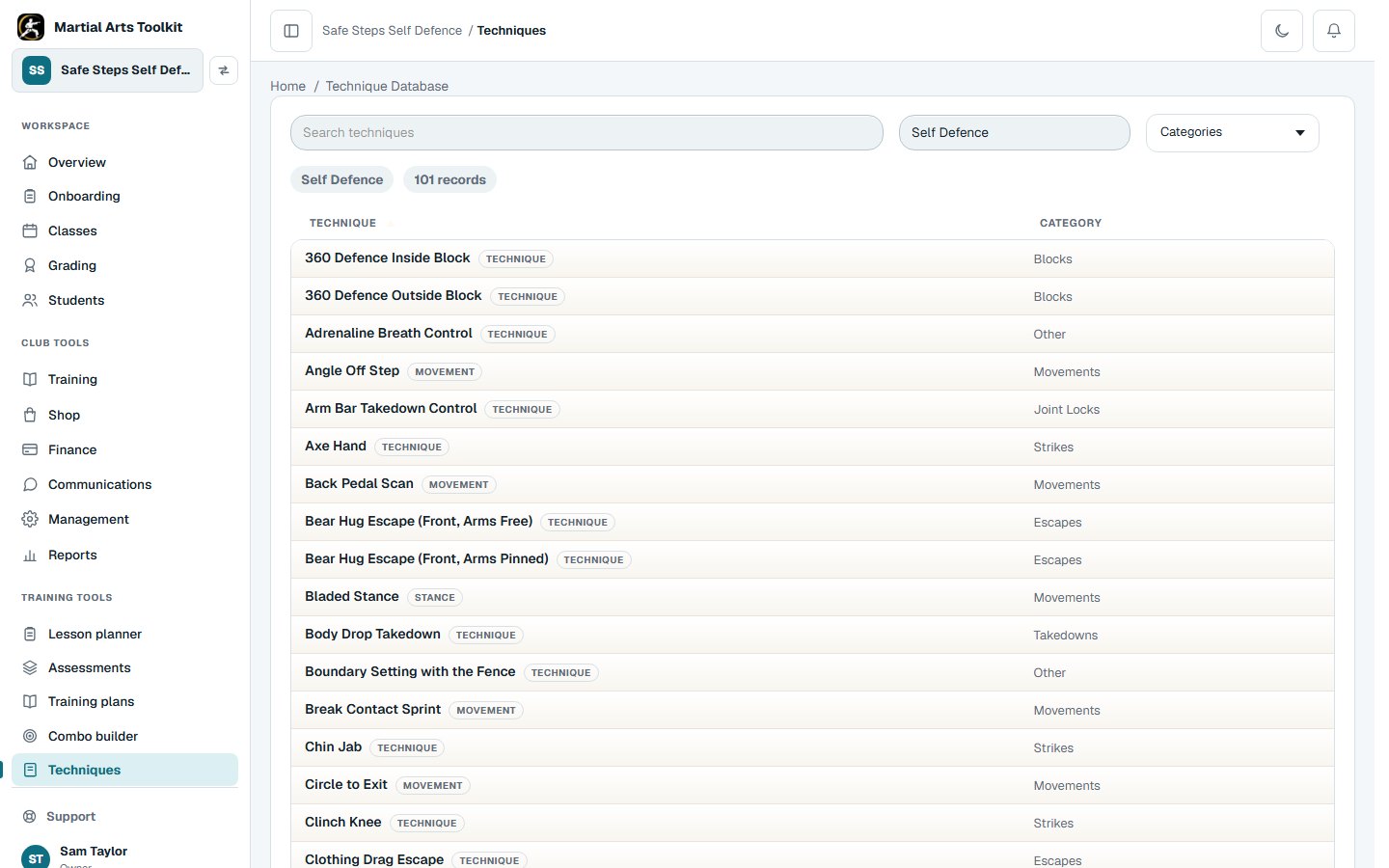
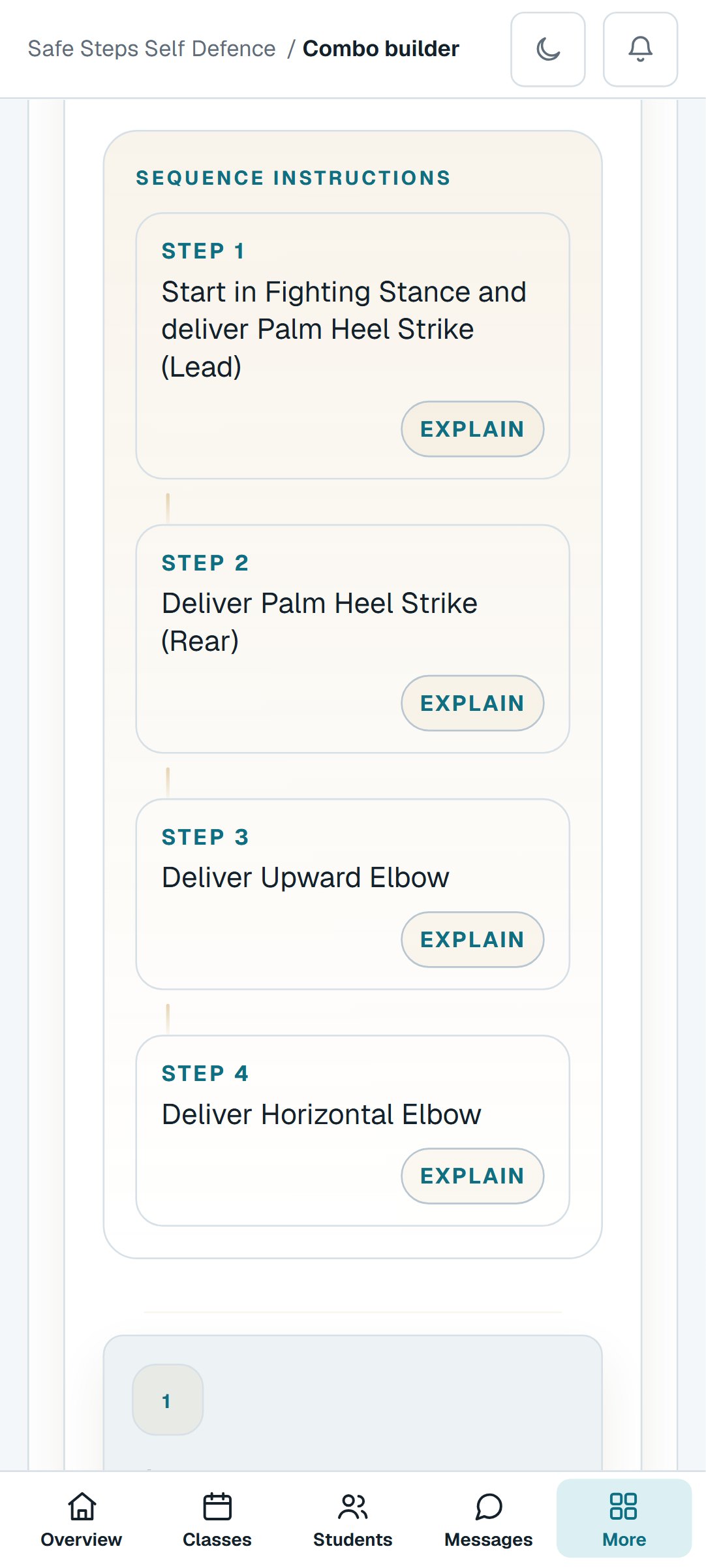
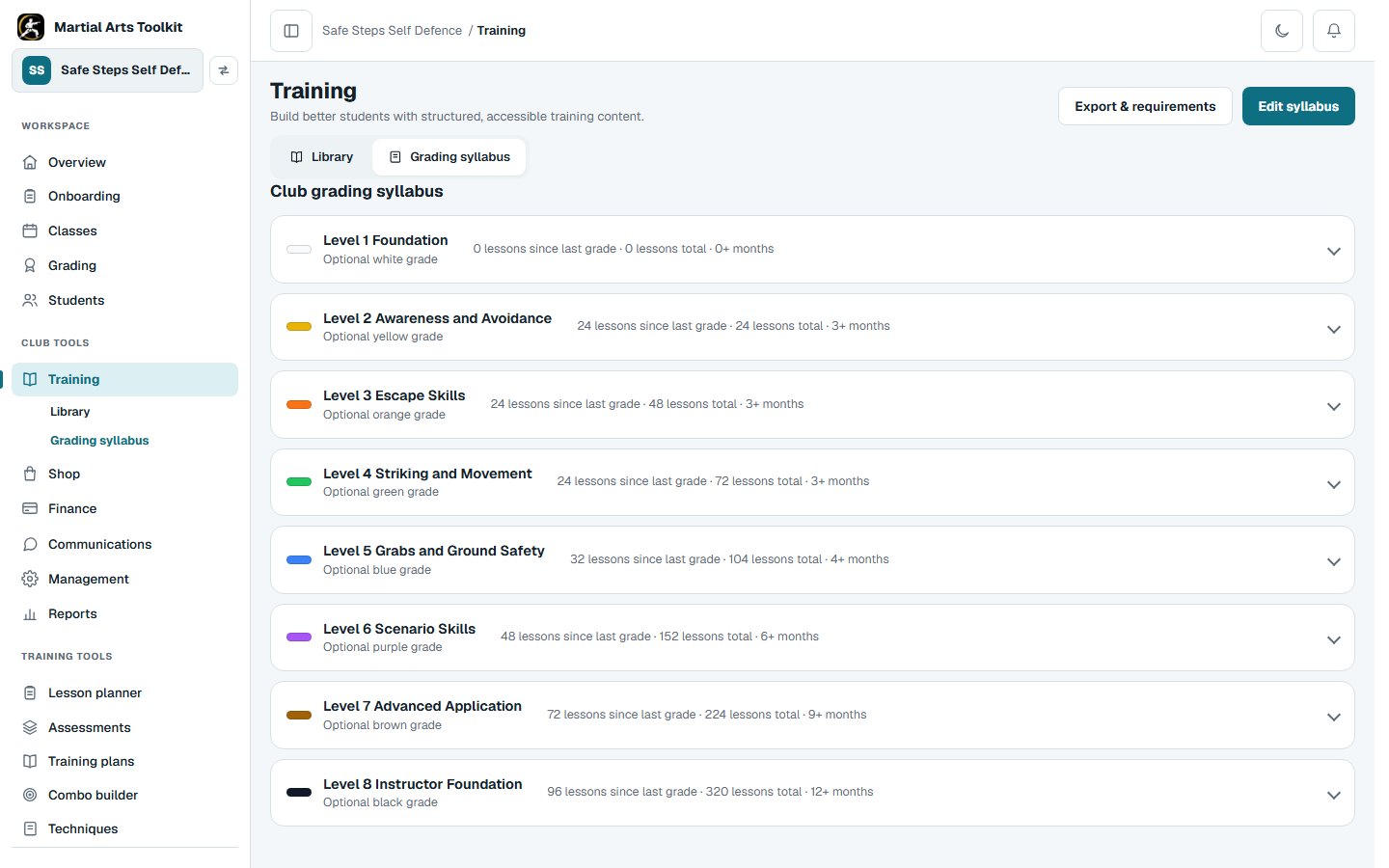
Real screens from Safe Steps Self Defence, an example Self Defence club: its technique library and grading syllabus on a computer, and the Combo Builder on a phone.
Screenshots use example data.
About the art
What is Self Defence?
Self-defence teaches practical ways to avoid, escape and survive an attack. It starts with awareness and de-escalation, then covers simple, effective strikes and escapes from grabs, chokes and headlocks, practised under realistic pressure.
Classes are taught to adults, women, children and workplaces, as ongoing classes or short courses, often by instructors from other martial arts. There is no single governing body, so each instructor sets their own structure.
- Origin
- Worldwide
- Known for
- Awareness, escapes and simple strikes
- Technique names
- English names
- Grades
- Level 1 Foundation to Level 8 Instructor Foundation
How we work with Self Defence
Built for the way Self Defence is taught
The Self Defence technique library and a starter grading ladder are ready when you create your club, and you can change any of it to match your syllabus.
Escapes and strikes
The library covers palm heels, hammer fists, elbows and knees, and escapes from front and rear chokes, headlocks and grabs, along with awareness drills.
Levels or courses
Start from suggested competency levels, or run short courses and simply record attendance.
Realistic sequences
The Combo Builder links escapes to follow-up strikes and a safe exit - buckling the base as the head comes free, then scanning before leaving.
From the Self Defence library
- Palm Heel Strike (Lead)
- Hammer Fist (Downward)
- Chin Jab
- Front Choke Escape
- Rear Choke Escape
- Headlock Escape (Side)
Forms
Self-defence has no forms. Classes are built around drills and scenarios instead.
Running the club
Everything else your club needs
Registers, gradings, payments and the student portal all use the same student record, so nothing has to be copied between spreadsheets.
Registers and attendance
Take the register on a phone or tablet in seconds and spot students who have stopped coming.
Grading readiness
Attendance, time in grade and assessments come together, so you can see who is ready for the next grading.
Memberships and payments
Set up memberships and take payments through Stripe, with a clear view of who has paid.
Classes and timetable
Recurring classes and one-off sessions in one timetable, with RSVP and check-in links for families.
Student and parent portal
Students and parents see grades, upcoming classes, assigned training and what to work on next.
Lesson plans and training plans
Plan classes from the technique library, assess students and give each one training to practise at home.
Try it with your own club
Less time on administration.
More time to teach Self Defence.
Create your club free and explore it with your own classes, or book a demo and we will show you around.
Questions
Self Defence clubs often ask
Can we run short courses?
Yes. Set up each session on the timetable and take registers, whether a course lasts a few weeks or classes run all year.
Can a martial arts club add self-defence classes?
Yes. A club can add more than one martial art, so self-defence classes can run alongside the main style with their own techniques.
Can we use our own syllabus and grades?
Yes. The starter ladder is only a starting point. Rename grades, change colours, add your own requirements and set the lessons and time each grade needs.
Can one club teach more than one martial art?
Yes. Choose a main martial art when you create your club and add others in the club settings. Each keeps its own technique library.
Can you move our students across from our current system?
Yes. Import students from a spreadsheet and check every row before it is saved, or send us your records and we will move them across for you free of charge.
How much does it cost?
Small clubs can use the Free plan with no card required. Paid plans add capacity and features as your club grows.