Inside the toolkit
See it in practice
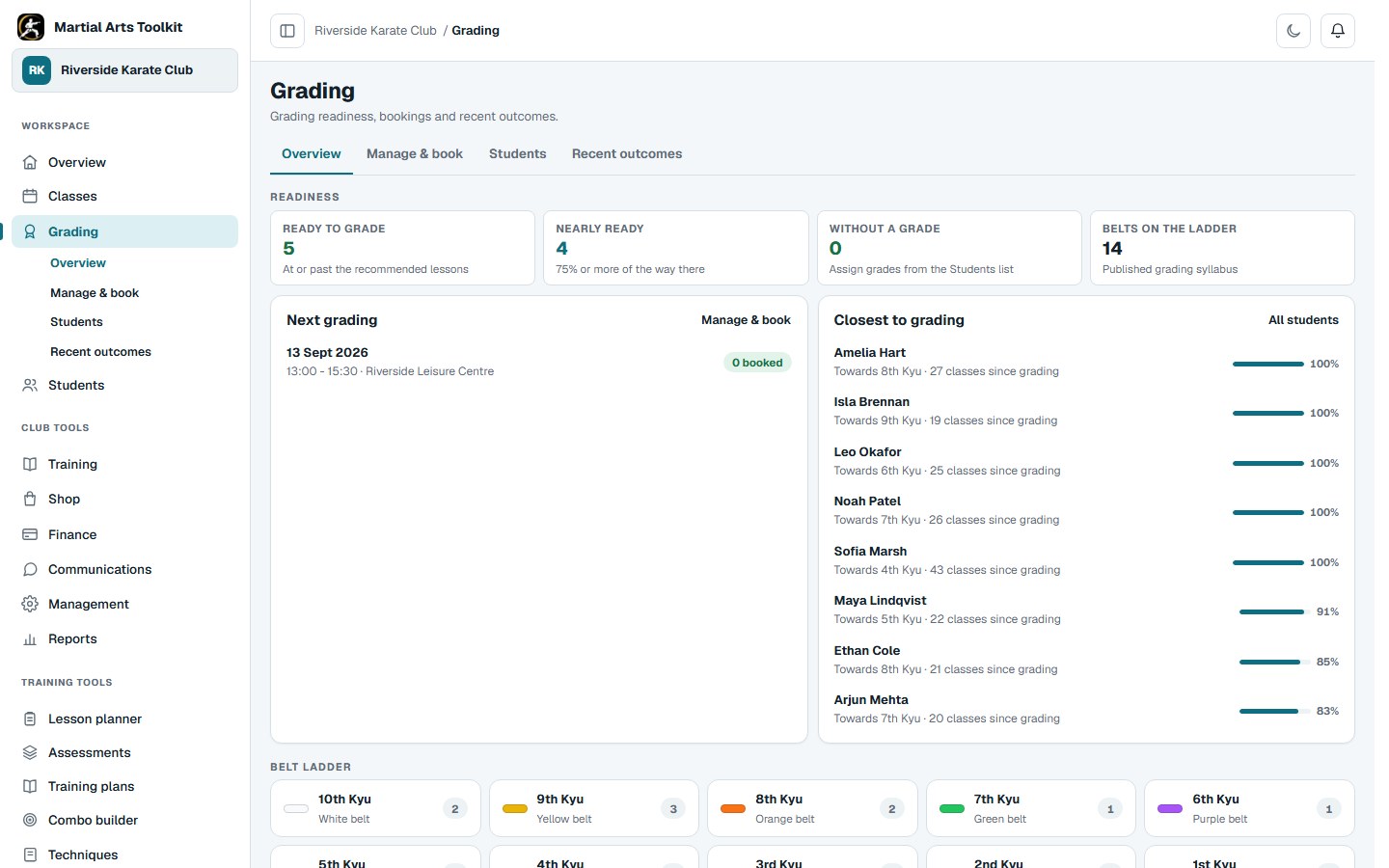
A local example club: readiness information gives the instructor a starting point for review.
A practical approach
Make it part of the way your club works
Set the requirements once
Use your own grading syllabus to define the grades and the requirements that matter to the club. Check that each student has the correct current grade and last grading date before relying on their progress information.
Review the evidence together
Compare recorded attendance and time in grade with the next grading requirements. Open the student's assessments to understand the quality of their work: a high attendance total is useful evidence, but does not establish technical competence.
Agree the next action
Invite a ready student to the grading, or give a nearly-ready student a focused training plan. After the grading, record the outcome so the next review starts from the right grade and date.
Worked example
Two students, two different next steps
This illustrative review separates eligibility from the teaching decision. The lesson threshold is an example club rule, not a universal martial arts requirement.
| Student | Evidence | Instructor's next step |
|---|---|---|
| Amelia | 27 classes since grading; the example minimum is 24 | Review her recent assessment before inviting her. |
| Ethan | 21 classes since grading; the same minimum is 24 | Keep training, check the attendance record and agree a review date. |
| Both students | Attendance alone cannot show every required skill | Use technical assessment and instructor judgement. |
Keep the context
Make a readiness figure explainable
If a student asks why they are not yet being invited, the answer should describe the outstanding requirement and what they can work on. A percentage without that explanation can create more questions than it resolves.
Check imported lesson totals, grading dates and any missing registers before making a decision. A clean record makes the conversation easier for the instructor, the student and their family.
Before you start
Questions club owners ask
Does the software decide who passes?
No. It helps organise the evidence and grading workflow. Instructors assess the student and record the outcome.
Can our club use its own belt structure?
Yes. The club's grading syllabus defines its progression. Review your requirements before publishing them for use in student reviews.
What if our attendance history is incomplete?
Check the available records and explain any gaps before using a readiness figure. When moving systems, agree which historical totals will be imported and which records need review.
Try it with your own club
Less time on administration.
More time to teach.
Create your club free today and explore the workflow. Compare plans as your club grows.