Inside the toolkit
See it in practice
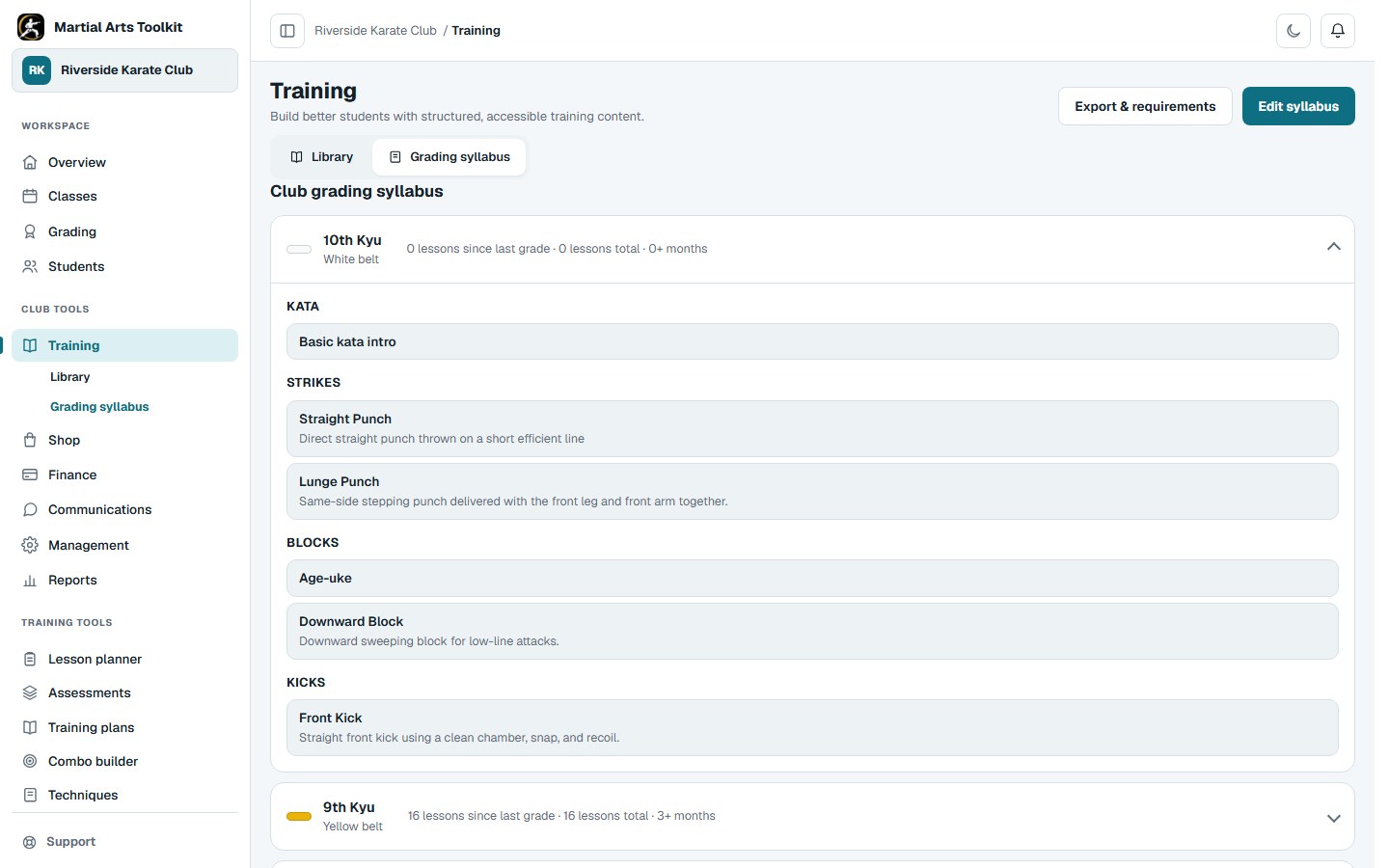
An example syllabus organised by grade. Your club defines the requirements it publishes.
A practical approach
Make it part of the way your club works
Outline the progression
List the grades in order and agree their names. Check how a new student enters the structure and how a student transferring from another club should be placed. Confirm the syllabus with the instructors who will use it.
Describe teachable requirements
Organise the techniques, forms or patterns and other requirements for each stage. Use descriptions that another instructor can understand. Keep the club's minimum attendance or time requirements distinct from the technical work the student needs to demonstrate.
Publish and review the result
Check the draft before publishing it for the club. Open a sample student to make sure their current grade and next requirements make sense. When changing the syllabus later, review the effect on students already part-way through it.
Worked example
Define the syllabus before reviewing readiness
These are example planning questions, not a prescribed syllabus. The club's instructors and relevant organisation decide the actual content.
| Part of the syllabus | Planning question | Useful check |
|---|---|---|
| Grade order | What comes before and after this grade? | Names and order match club practice. |
| Technical work | Which skills should the student demonstrate? | Descriptions are specific enough to teach and assess. |
| Forms or patterns | Which sequence belongs at this stage? | The correct version and expectations are clear. |
| Readiness requirements | What attendance or time requirements apply? | Minimum eligibility is separate from the final decision. |
Keep the context
Keep requirements separate from outcomes
The syllabus describes what is expected. A student's assessment describes what they have demonstrated. Keeping both records clear makes it easier to explain progress and agree a useful training plan.
The grading-and-belt-tracking workflow is the next step: it brings the student's evidence against those requirements into a review. You do not need to rewrite the syllabus for each student.
Before you start
Questions club owners ask
Do all clubs have to follow the default syllabus?
No. A starting syllabus is a convenience. Your club should review and configure its own progression and requirements.
Is this only for karate kata?
No. The product supports different martial arts and terminology. The taekwondo example below shows why patterns and club-defined requirements need their own treatment.
Does publishing a syllabus award grades?
No. Publishing the requirements and recording a student's grading outcome are separate actions.
Try it with your own club
Less time on administration.
More time to teach.
Create your club free today and explore the workflow. Compare plans as your club grows.