Inside the app
See Kickboxing in Martial Arts Toolkit
Real screens from Eastbrook Kickboxing, an example Kickboxing club: its technique library and grading syllabus on a computer, and the Combo Builder on a phone.
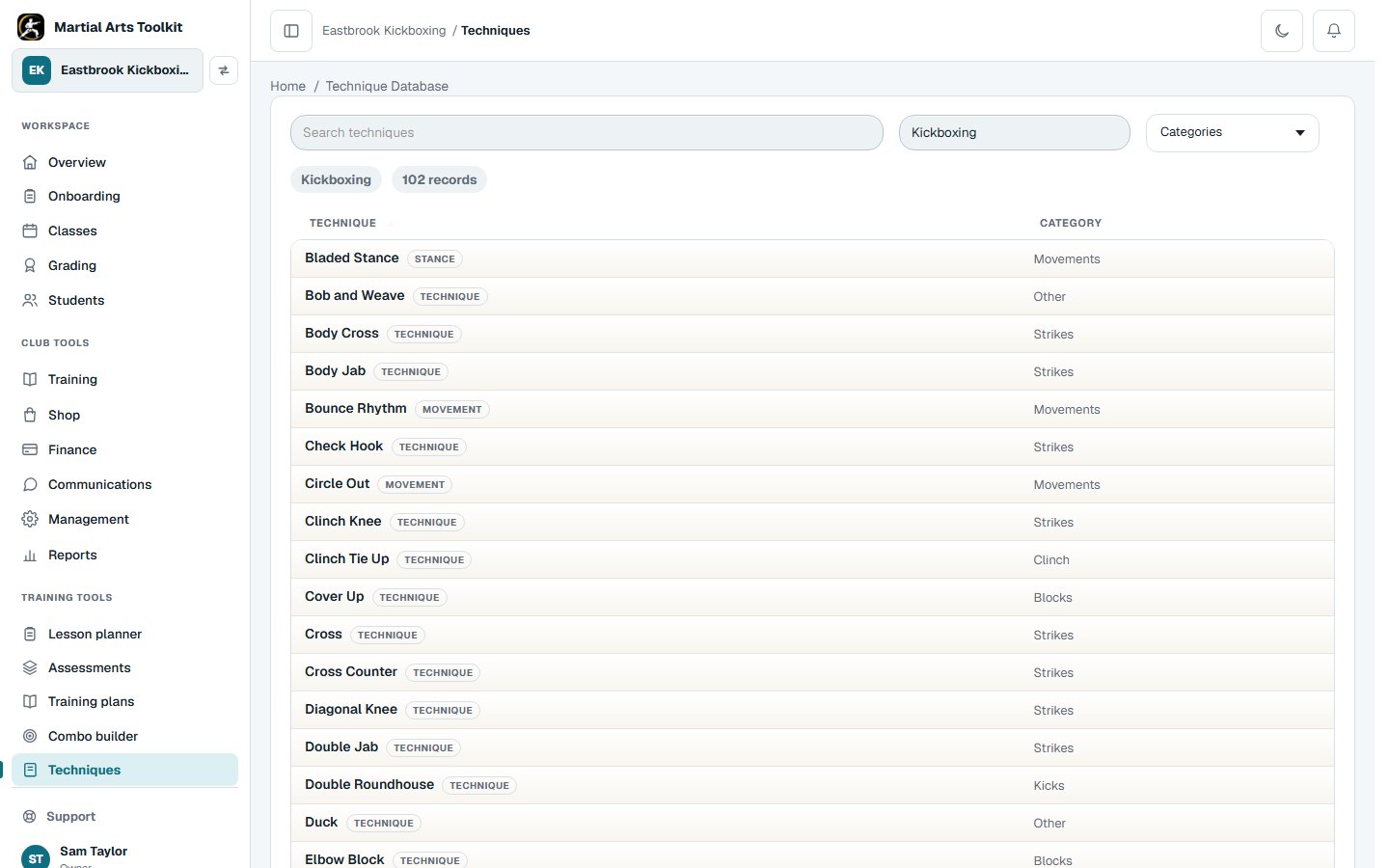
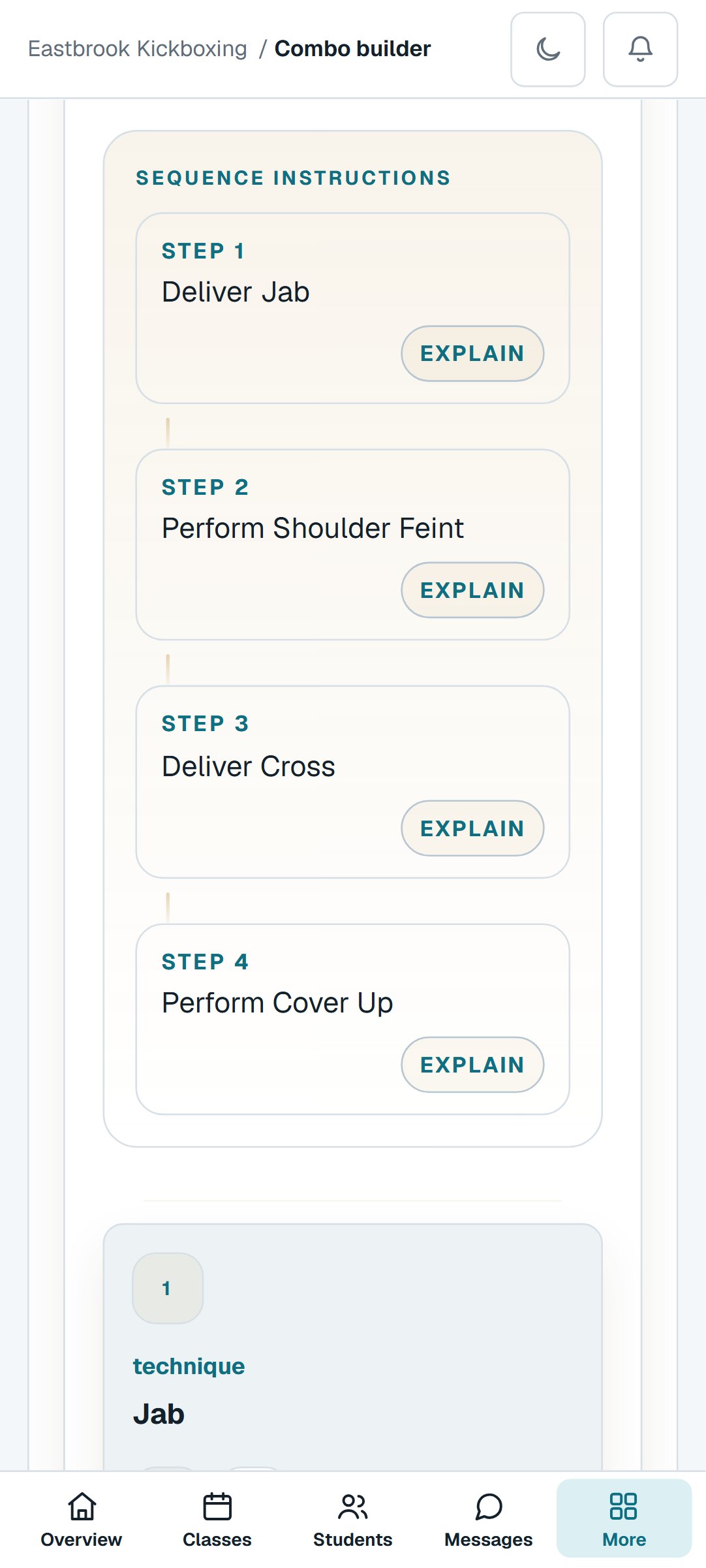
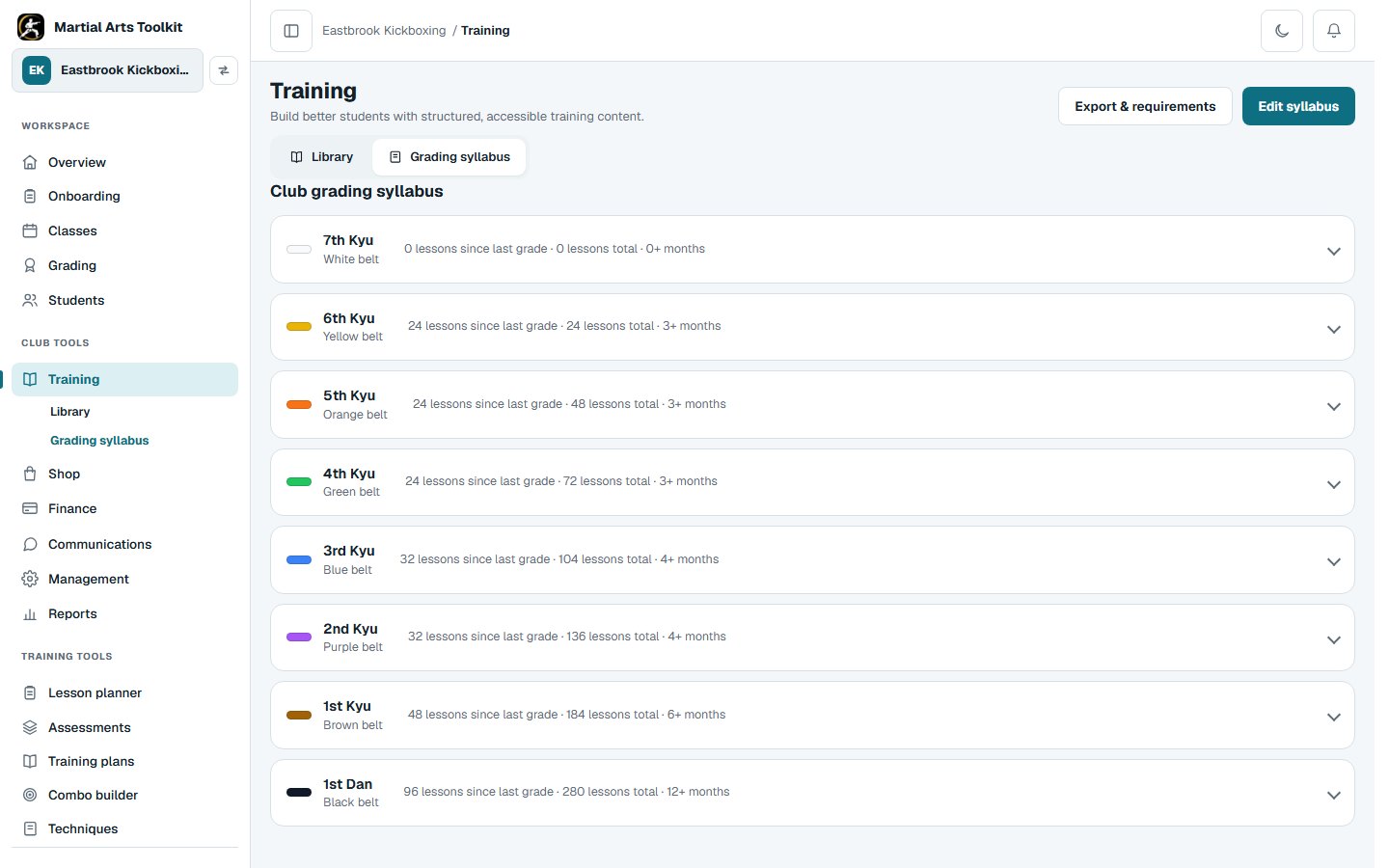
Screenshots use example data.
About the art
What is Kickboxing?
Kickboxing is a stand-up combat sport that combines boxing punches with kicks. It developed in the 1960s and 1970s from Japanese kickboxing and American full-contact karate, and today it is practised under several rule sets, from points and light contact to full contact and K-1.
Clubs teach kickboxing for fitness, self-defence and competition, often to adults and juniors in separate classes. Many use a coloured-belt grading system so that students have clear milestones between competitions.
- Origin
- Japan, the USA and Europe
- Known for
- Punches, kicks and pad work
- Technique names
- English names
- Grades
- 7th Kyu to 1st Dan
How we work with Kickboxing
Built for the way Kickboxing is taught
The Kickboxing technique library and a starter grading ladder are ready when you create your club, and you can change any of it to match your syllabus.
Striking and defence
The library covers jabs, crosses, hooks and uppercuts, front, round and side kicks, knees, and the blocks, parries and slips that go with them.
A belt ladder to start from
Start from a common club belt order to 1st Dan and set the lessons and time each grade needs.
Pad-work combinations
The Combo Builder chains strikes and kicks that follow on naturally - an uppercut that lifts the chin into a head kick - for pad rounds and class warm-ups.
From the Kickboxing library
- Jab
- Cross
- Lead Hook to the Head
- Rear Uppercut
- Check Hook
- Jumping Front Kick
Forms
Kickboxing has no traditional forms. Classes are built around drills, pad work and sparring instead.
Running the club
Everything else your club needs
Registers, gradings, payments and the student portal all use the same student record, so nothing has to be copied between spreadsheets.
Registers and attendance
Take the register on a phone or tablet in seconds and spot students who have stopped coming.
Grading readiness
Attendance, time in grade and assessments come together, so you can see who is ready for the next grading.
Memberships and payments
Set up memberships and take payments through Stripe, with a clear view of who has paid.
Classes and timetable
Recurring classes and one-off sessions in one timetable, with RSVP and check-in links for families.
Student and parent portal
Students and parents see grades, upcoming classes, assigned training and what to work on next.
Lesson plans and training plans
Plan classes from the technique library, assess students and give each one training to practise at home.
Try it with your own club
Less time on administration.
More time to teach Kickboxing.
Create your club free and explore it with your own classes, or book a demo and we will show you around.
Questions
Kickboxing clubs often ask
Can juniors and adults have different gradings?
Yes. Build the grades your club uses and set separate requirements where juniors and adults differ.
Can members pay monthly by card?
Yes. Set up memberships and take payments through Stripe, with the membership status visible on each member's record.
Can we use our own syllabus and grades?
Yes. The starter ladder is only a starting point. Rename grades, change colours, add your own requirements and set the lessons and time each grade needs.
Can one club teach more than one martial art?
Yes. Choose a main martial art when you create your club and add others in the club settings. Each keeps its own technique library.
Can you move our students across from our current system?
Yes. Import students from a spreadsheet and check every row before it is saved, or send us your records and we will move them across for you free of charge.
How much does it cost?
Small clubs can use the Free plan with no card required. Paid plans add capacity and features as your club grows.