Inside the toolkit
See it in practice
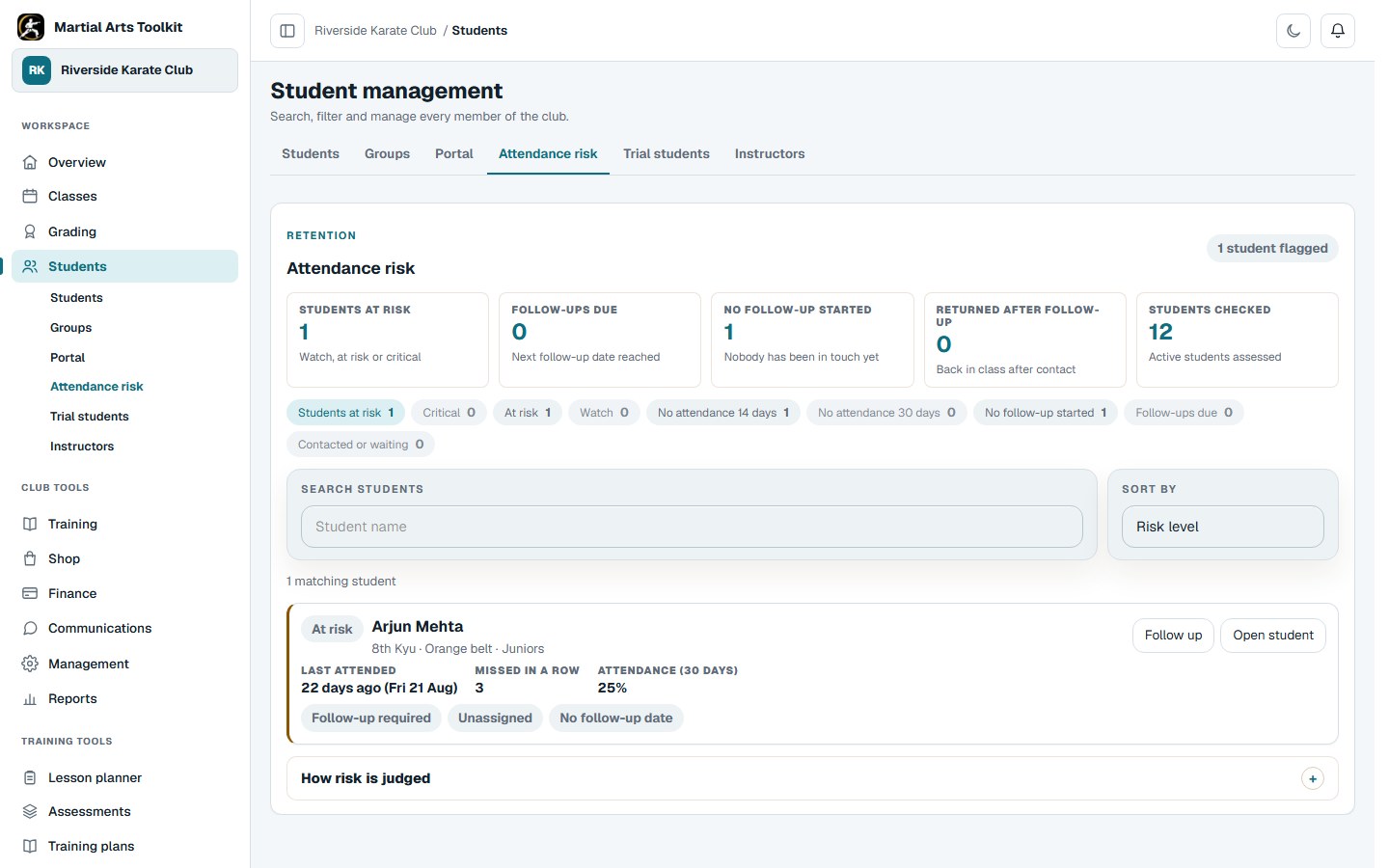
The application's attendance information supports review; the conversation explains the context.
A practical approach
Make it part of the way your club works
Choose comparable periods
For example, compare the last four weeks with the previous four. Count the sessions the student could reasonably attend. Exclude cancelled classes and account for a known change in their normal training schedule.
Look for a meaningful change
Review both the count and the pattern. Two missed weeks in a row can warrant a different conversation from occasional absences across several months. Check the register is complete before acting on the numbers.
Ask, listen and agree a next step
Use a friendly message such as: 'We have missed seeing you recently. Is there anything we can help with?' The answer may suggest a different class, a temporary pause or a simple correction to the record.
Worked example
Worked example: a change worth checking
Jamie normally trains twice a week. Both four-week periods below had eight suitable sessions. This is an illustrative calculation, not an automated prediction of whether Jamie will leave.
| Period | Expected sessions | Attended | Attendance |
|---|---|---|---|
| Previous four weeks | 8 | 7 | 87.5% |
| Most recent four weeks | 8 | 3 | 37.5% |
| Change | Comparable opportunities | 4 fewer visits | 50 percentage points lower |
Keep the context
Use the example to start a conversation
The next question is what changed. If Jamie was away for two weeks, the original comparison may not reflect the opportunities they actually had. If the timetable changed, the club might be able to offer a more suitable class.
Agree who follows up and when to review again. Record only the information useful to supporting the student, and avoid labelling them as likely to leave on attendance alone. Martial Arts Toolkit brings attendance records into the club workspace so this review does not begin with collecting several registers.
Before you start
Questions club owners ask
What attendance percentage means a student will leave?
There is no universal percentage that establishes that. Compare the student's own pattern and speak with them about the reason for the change.
Should a known holiday count as a warning?
Keep the attendance record accurate, but take the known context into account when interpreting it. A planned absence needs a different response from an unexplained change.
How often should the club review attendance?
Choose a routine staff can maintain, such as a brief weekly review. The right timing depends on how often students normally train and how quickly the club can follow up.
Try it with your own club
Less time on administration.
More time to teach.
Create your club free today and explore the workflow. Compare plans as your club grows.